Last-Minute Client Visit Guide: How to Prepare Your Office Quickly
Read Time:6 Minute, 33 Second
You desire a pragmatic, last-minute, client-ready playbook that does not feel tense or stressful. The following is a step-by-step plan that you can use even when the visit is approaching soon.
A client visit may occur at any time with virtually no notice: a “We’re in the neighborhood,” a last-minute opening in the schedule, or a request to visit your space before a signature. The great news is that you do not require a picture-perfect office to impress.
What you should have is a straightforward plan that prioritizes what the clients see, removes distractions, and makes your team feel ready rather than panicked. This is like a quick, high-impact reset, and it is an indicator of professionalism, attention to detail, and respect for the time of your guest.
The 10-Minute Walkthrough: See Your Office Through Client Eyes
Take a one-minute tour around your workplace before touching a single surface, acting just like a visitor who has not seen the place before. You are looking for things that produce doubt, confusion, or visual noise.
Focus on these questions:
- So, what do they see when they get there?
- Where will they sit, and what will they see when they sit down?
- Do you have any smells, sounds, or clutter hotspots which are distracting?
- Is the space conveying how we desire to be viewed (structured, secure, current, friendly)?
This walk-through will ensure you do not commit the most frequent mistake of cleaning things that the client will never see. You are not thoroughly cleaning the building; you are playing out a scenario.
The Ultimate 60-Minute Office Cleaning Checklist
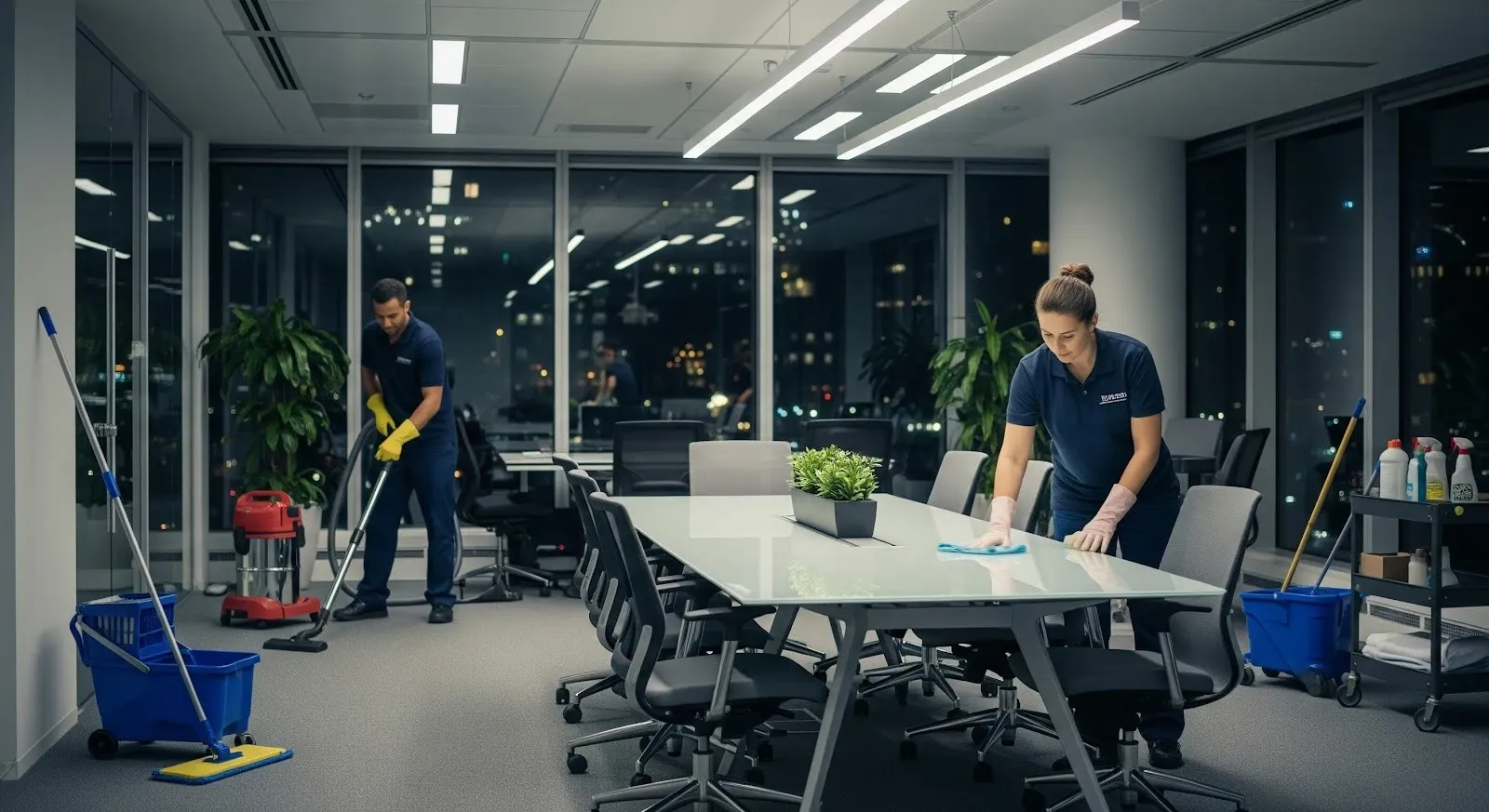
When you have no more than an hour (or perhaps a little longer), these are the jobs that will give the greatest obvious reward.
- Discard garbage and remove liners (including small bins).
- Clear clutter off flat surfaces (reception desk, tables, counters).
- Wipe high-touch points (door handles, light switches, faucet handles).
- Clear glass at eye level (front door, the panels on the conference room, the internal windows).
- Spot-clean floors (entrance and any walking areas that are visible).
- Perform a toilet check (discussed below).
- Include basic indicators of being ready (water, notepads, clean chairs, working pens).
You will find that much of this is about getting rid of friction and distraction. Customers remember the way an area makes them feel, and a neat and tidy place will open up easier dialogues.
Optimizing the Reception Area: Winning the First Impression
Clients usually make a judgment even before one greets them. That is why you should give disproportionate attention to your entry and reception.
Prioritize:
- Clean the waiting area (no boxes, cords, or wobbling signage).
- Wipe the glass and handles of the front door.
- Fold or organize seating, magazines, brochures, and any branded material.
- Lighting (turn on lights to create openness).
- Clear the reception desk of personal possessions (mugs, food containers, little sticky notes).
Unless you have branded signage, ensure that it is not covered by plants, boxes, or a coat rack. Without signage, a mere printed “Welcome” sign can make the visit meaningful.
Conference Room Setup: Ensuring a Professional Meeting Space
A meeting room needs to convey a message quietly: that it is ready for them. That is, the room is not dirty, the technology is functional, and nothing looks amateurish.
Do a fast reset:
- Clean the table, chair arms, and any dirty whiteboards.
- Unplug unused cables, and wrap up those that you do use.
- Prepare water and cups (or bring them in when the client arrives).
- Place pens and notepads on seats neatly.
- Do not wait until the client arrives to run the tech check.
Tech check essentials:
- Ensure Wi-Fi connection (guest network if it exists).
- Check TV/Display and audio.
- Pre-open the slide deck or demo environment.
- Have a backup plan (HDMI adapter, printed handout, or a laptop-only version).
When you are in a meeting room with a glass wall, it is easy to make an impression by cleaning the surface at eye level to create a significantly more premium feel.
Restroom and Break Room Hygiene: The Credibility Test
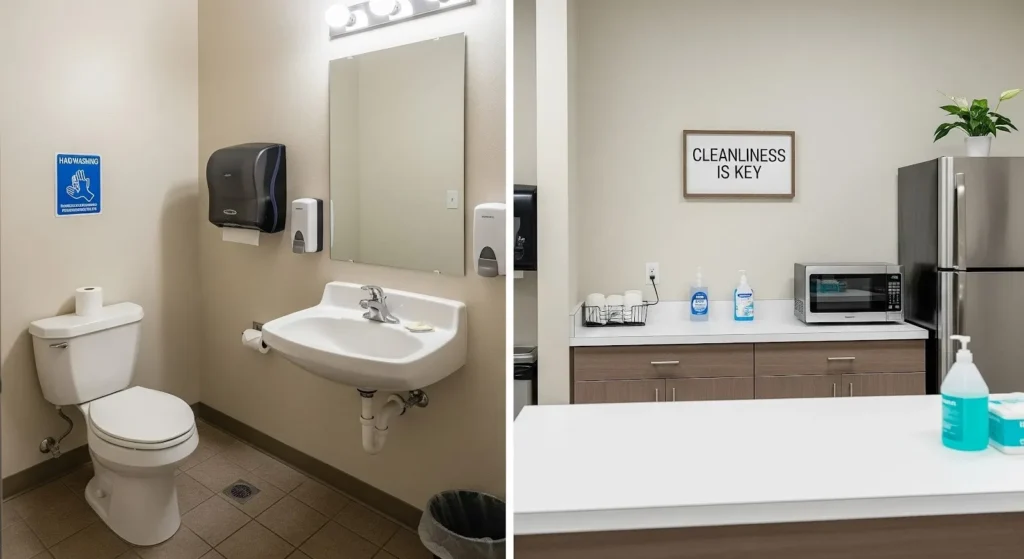
Bathrooms are a credibility test. When they are clean, clients hardly comment, but when they are not clean, they are sure to notice.
Restroom quick reset:
- Restock toilet paper, paper towels, and soap.
- Wipe sink, faucet, and counter.
- Wipe the mirror to remove visible spots.
- Take out trash and change the liner.
- Check the floor or spot mop by the sink and doorway.
In the case of the kitchen/break area, put emphasis on anything that translates to neglect:
- Wipe out the sink (no dishes, no old sponges on exhibit, etc.).
- Sanitize handles and surfaces (like the microwave handle).
- Dispose of old food in the fridge if it looks expired (unless items are labeled as personal).
- Take out trash and recycling.
These areas are an indication of how you manage when nobody is observing, and that is what clients subconsciously consider.
When to Hire Professional Office Cleaning Services in Richmond
On some occasions, the quickest way to get client-ready can be getting assistance, particularly when you are handling high traffic, a rainy day, or a visit that may interfere with a deal.
When you are in a tight spot and feel the need for a quick reset of shared spaces, washrooms, floors, and glass, hiring an office cleaning service in Richmond can be a simple method of getting your room ship-shape without pulling your entire team away from their respective work.
Although you do a majority of the work in-house, high-impact areas can be easily and efficiently maintained with specific professional cleaning services, which will alleviate stress and allow your staff to remain focused on the client discussion.
Office Decluttering Tips and Storage Solutions
The reality of the matter is as follows: the greatest portion of the stress caused by time-constrained client preparation has nothing to do with dirt and everything to do with clutter. Random boxes, additional chairs, stale marketing materials, and excess inventory cause visual noise, even if the space is technically clean.
Some fast clutter rules that are effective:
- Clean first (entry, reception, meeting room, main hallway).
- Remove all that appears to be temporary (open boxes, piles of paper, unplugged devices).
- Keep as little as possible to support the visit (samples, brochures, a small branded display).
- Get things out of sight (clients can see the pile).
In case clutter is a regular problem, a more lasting solution is better than repeating the same scramble. Overflow items can be stored using Commercial Storage Solutions, which will ensure that your working environment does not feel clogged while giving you quick access to what you require as projects intensify.
The Final 15-Minute Sweep: Last Steps Before Arrival
Check with a brief list just prior to the arrival of the client. This is where you avoid minor and unnecessary distractions.
- Perform a smell test (trash, bathrooms, lunch leftovers, excessively strong air fresheners).
- Arrange the chairs in a clear and organized manner and clear out additional seats if the room is too crowded.
- Shut unused doors and reduce noise where possible.
- Designate someone to be ready to meet the client on time.
- Switch off phones and lessen background noise.
You should assign one person to host the arrival. Small flaws can be compensated for by a warm welcome and clear guidance toward the meeting room.
Conclusion: Mastering the Last-Minute Office Visit
The process of getting ready to talk with a client at short notice is more about smart priorities than flawless cleaning: first impressions, being ready to meet, having credibility in the restroom, and clearing up clutter. By concentrating on what the clients are actually experiencing, it will be possible to develop a peaceful business atmosphere in a short time, even when the schedule is tight.

Happy
0 %

Sad
0 %

Excited
0 %

Sleepy
0 %

Angry
0 %

Surprise
0 %
 0
0
 0
0