
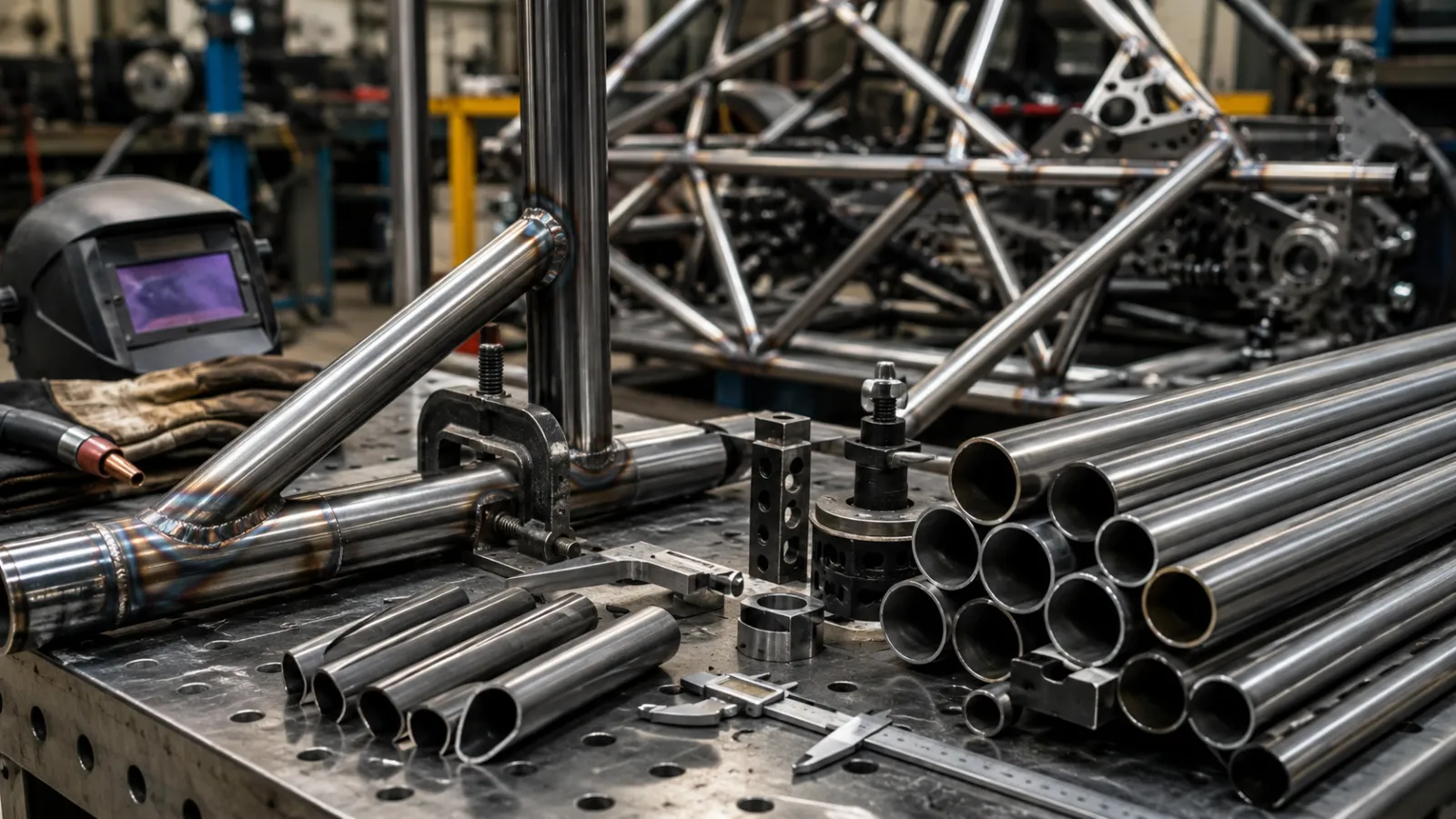
What Chrome Moly Tubing Is and Why Industries Choose It
Read Time:4 Minute, 9 Second
Chrome moly tubing is a category of alloy steel tube valued for its strength-to-weight balance, toughness, and ability to perform under repeated stress. It shows up in projects where standard mild steel might be too heavy for the stiffness required, or where fatigue life matters more than simply meeting a one-time load.
In Australia, the phrase chrome moly tubing australia often comes up in the context of fabricators and builders comparing alloy tubing options for structural frames, mechanical assemblies, and performance-oriented designs. Understanding what chrome moly is, and what it isn’t, makes it easier to decide when it’s the right material choice.
What “chrome moly” actually means
“Chrome moly” is short for chromium-molybdenum alloy steel. Instead of being mostly iron and carbon like basic mild steel, it includes controlled amounts of chromium and molybdenum that improve strength, hardenability, and high-stress performance.
One of the most common chrome moly alloys people refer to is 4130, but “chrome moly” is used broadly as a practical shorthand. The key idea is that these alloys are engineered to deliver higher mechanical performance than mild steel at comparable sizes, which is why they’re often specified as tubing rather than plate.
Why tubing matters as much as the alloy
Tubing is a shape that naturally resists bending and twisting compared with flat bar or plate of similar weight. When you combine a mechanically strong alloy with an efficient shape, you get structures that can be lighter without becoming flimsy.
That’s why chrome moly is frequently used in:
- frames and space structures
- roll cages and safety structures
- arms, struts, and linkages
- mounts and brackets where stiffness is critical
The alloy improves the material properties, but the tube geometry is what often delivers the real-world stiffness gains designers are chasing.
The main benefits: strength, toughness, and fatigue performance
Chrome moly’s reputation comes from a few practical advantages.
Higher strength for a given sizeCompared with mild steel, chrome moly can offer higher yield and tensile strength, which can allow thinner walls or smaller diameters for the same load capacity in some designs.
Toughness under impact and vibrationIn applications that see shock loads or constant vibration, toughness helps prevent brittle failures. Chrome moly is often chosen when a part needs to survive abuse, not just pass a static load calculation.
Better performance under repeated loadingMany real parts fail due to fatigue, not instant overload. With good design and fabrication, chrome moly can be a strong option for components that see thousands of load cycles over time.
These benefits are not automatic, though. They depend heavily on how the tube is designed into the structure and how it’s welded and finished.
Why some industries prefer it
Chrome moly is popular in sectors where weight, stiffness, and durability sit in constant tension.
Motorsport and performance fabrication
Roll cages, chassis components, and suspension-related parts often demand stiffness without excessive mass. Chrome moly helps designers hit targets without simply “adding more steel.”
Aerospace-adjacent and precision mechanical work
In highly engineered builds, material consistency and predictable properties matter. Alloy steels are often selected where performance margins are tighter.
Industrial projects with high stress and movement
Not every industrial application needs chrome moly, but it can make sense for parts that see repeated loads, shock, or aggressive duty cycles.
The common thread is not “high strength” as a bragging right. It’s the need for reliable performance in demanding conditions.
Trade-offs to understand before choosing chrome moly
Chrome moly is not always the best choice. A few common trade-offs explain why.
Cost and availability constraintsAlloy tubing can be more expensive than mild steel, and certain sizes or wall thicknesses may be less readily available depending on supply.
Corrosion behaviorChrome moly is still steel. It does not behave like stainless. If the environment is wet, salty, or corrosive, you’ll usually want a protective coating strategy.
Welding sensitivity compared with mild steelChrome moly is weldable, but it can be less forgiving. Heat input, joint prep, filler selection, and post-weld treatment choices can influence final performance, especially on thicker sections or safety-critical structures.
For many everyday brackets, frames, and covers, mild steel remains the sensible option because it’s cheaper, simpler to work with, and more forgiving of imperfect fabrication.
How to think about “the right” chrome moly tube
If you’re evaluating chrome moly tubing, it helps to frame the decision around requirements rather than labels:
- What loads will the part see, and are they repetitive?
- Is weight a genuine constraint, or just a preference?
- Will the tube be welded, bent, notched, or heavily formed?
- What environment will it live in, and how will you protect it?
- Does the project require traceability or specific standards?
When the answers point toward high stress, repeated loading, and a need to manage weight or stiffness, chrome moly becomes a rational engineering choice rather than an upgrade for its own sake.

Happy
0 %

Sad
0 %

Excited
0 %

Sleepy
0 %

Angry
0 %

Surprise
0 %
 0
0
 0
0