Applying Serums and Masks Better: Tools That Reduce Waste and Irritation
Read Time:4 Minute, 16 Second
Most people think skincare results come down to the formula. That matters, but how you apply products can quietly change outcomes too. Tugging, over-rubbing, double-dipping into jars, or using too much product can lead to irritation, uneven coverage, and wasted serum sitting on your hands instead of your face.
A small set of skin care accessories can make application cleaner and more consistent, especially for products that are easy to overuse or contaminate, like watery serums, gel masks, and clay masks. The goal is not to “add steps,” but to reduce friction, mess, and guesswork.
Why fingers sometimes make skin angrier
Hands are convenient, but they’re not always ideal for every texture. Common problems include:
- Friction and tugging: Rubbing too hard, especially around the eyes and corners of the nose, can worsen redness and sensitivity.
- Over-application: It’s easy to pour too much serum into your palm and then feel compelled to use it all.
- Contamination: Jar products are vulnerable when fingers go in repeatedly, especially if hands weren’t washed thoroughly or nails trap residue.
- Uneven distribution: Thick masks can apply patchy, leading to some areas drying out while others stay wet.
Tools can help by making the application lighter, more even, and more hygienic.
The serum problem: too much product, too much rubbing
Serums are designed to spread in thin layers. The most common mistakes are using too much and then working it in aggressively.
A better approach is applying in two light passes: press a thin layer in, wait a moment, then only add more where skin actually needs it. Tools can support that “thin layer” mindset by controlling dosage and reducing hand-to-face rubbing.
Spatulas: the simplest upgrade for masks in jars
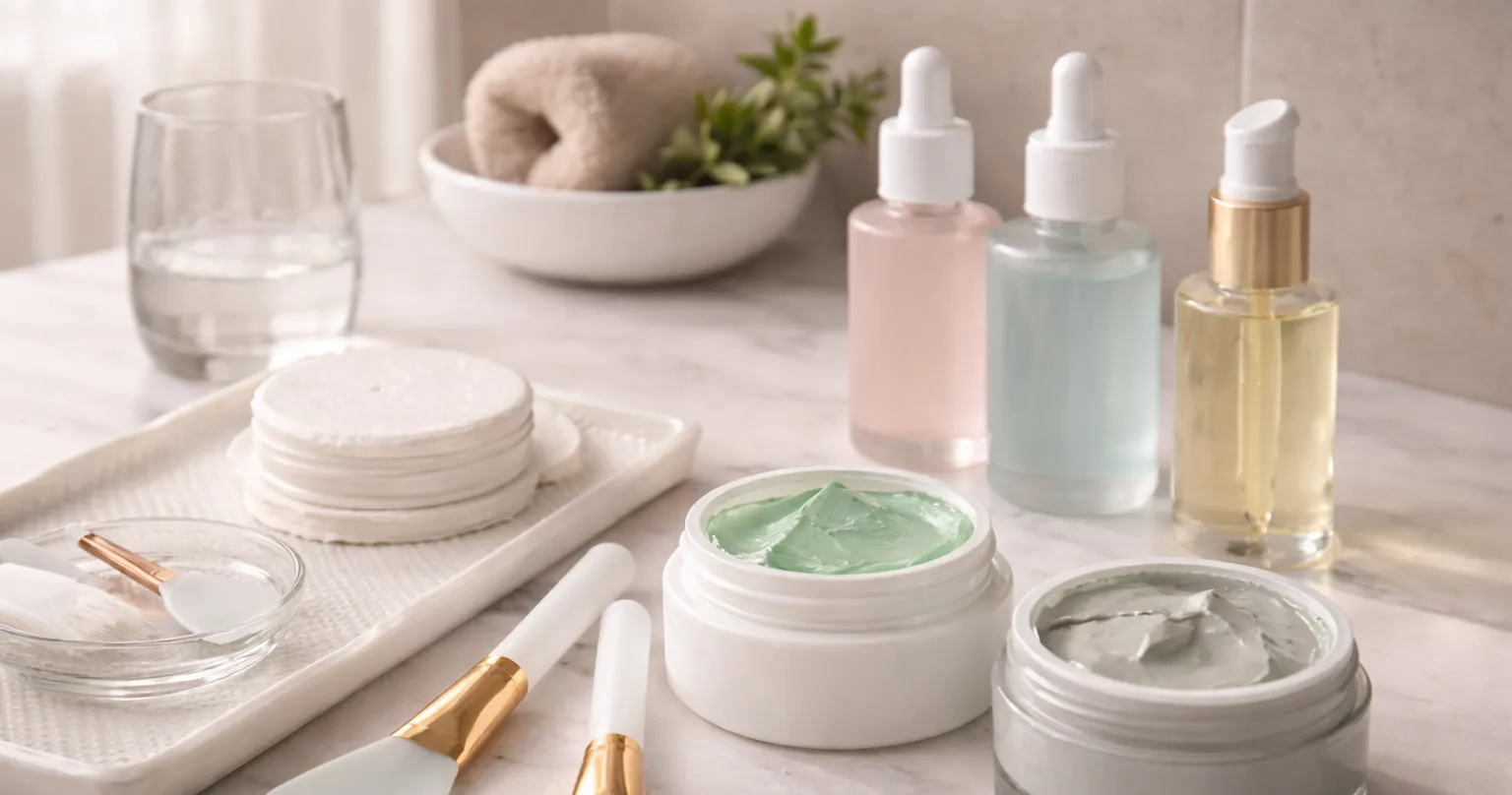
If you use clay masks, sleeping masks, or balm textures, a small spatula is one of the most practical tools you can add.
Why it helps:
- Keeps jars cleaner by avoiding repeated finger contact
- Lets you portion a consistent amount each time
- Prevents nails from scraping product and introducing bacteria
A good habit is to scoop product onto a clean palette surface or the back of a clean hand, then apply with a brush or silicone applicator instead of dipping back into the jar.
Mask brushes: even coverage with less waste
A soft mask brush is especially useful for clay and gel masks. It gives you a thin, even coat without overloading the product.
Benefits:
- More uniform application, especially around the nose and jawline
- Less product wasted on hands and under fingernails
- Lower friction compared with rubbing a mask in with fingers
The best technique is painting the product on in light strokes, then leaving it alone. Masks generally work by sitting on the skin, not by being massaged in.
Silicone applicators: gentle, low-friction, easy to clean
Silicone tools are great for sensitive skin because they glide rather than drag. They also rinse clean more easily than dense bristles.
They’re especially helpful for:
- Thick sleeping masks
- Cooling gel masks
- Barrier creams that you want to apply without overworking
If you’re prone to redness, silicone applicators can reduce the “scrub effect” that sometimes happens when people try to spread sticky textures by force.
Reusable pads and soft cloths: for removal without over-exfoliating
How you remove a mask matters as much as how you apply it. Aggressive scrubbing is a common trigger for irritation.
A soft, damp reusable pad or gentle cloth helps by:
- Lifting product with less rubbing
- Reducing the temptation to “polish” the skin
- Making removal more controlled around sensitive areas
The trick is to soak the mask slightly first, then wipe gently. If you feel like you need to scrub, the mask is either too dry or has been left on too long.
A simple hygiene routine that prevents tool-related breakouts
Tools only help if they’re clean. The good news is you don’t need a complicated system.
- Wash applicators promptly with warm water and a gentle cleanser
- Let tools dry fully in open air before storing
- Don’t keep damp tools in closed containers
- Replace anything that develops persistent odour, staining, or rough edges
If you use tools a few times per week, a quick clean after each use is far easier than trying to deep-clean later.
Matching tools to product types
If you want an easy way to decide what’s worth using:
- Jar masks and balms: spatula + brush or silicone applicator
- Clay masks: brush for thin, even coverage; soft cloth for gentle removal
- Gel masks and sleeping masks: silicone applicator for low friction
- Watery serums: hands can be fine, but focus on pressing rather than rubbing
- Cream serums and barrier products: a silicone tool can help if you over-rub
You don’t need every tool. One applicator and one removal cloth can cover most routines.
The “less irritation, less waste” approach
If your skin gets reactive, the safest upgrade is not adding stronger actives. It’s improving technique: thinner layers, less friction, cleaner handling, and gentler removal. Tools support that by making the easiest option also the gentlest one.

Happy
0 %

Sad
0 %

Excited
0 %

Sleepy
0 %

Angry
0 %

Surprise
0 %
 0
0
 0
0