Victorian Ceiling Roses Explained: Origins, Purpose, and Design
Read Time:4 Minute, 24 Second
A Victorian home’s ceiling often does more than “finish” a room. It frames it. Ceiling roses became one of the most recognisable features of Victorian-era interiors because they combined practicality with ornament, turning a simple light point into a deliberate focal centre. Even in rooms without heavy decoration elsewhere, a well-proportioned rose can make the ceiling feel considered rather than blank.
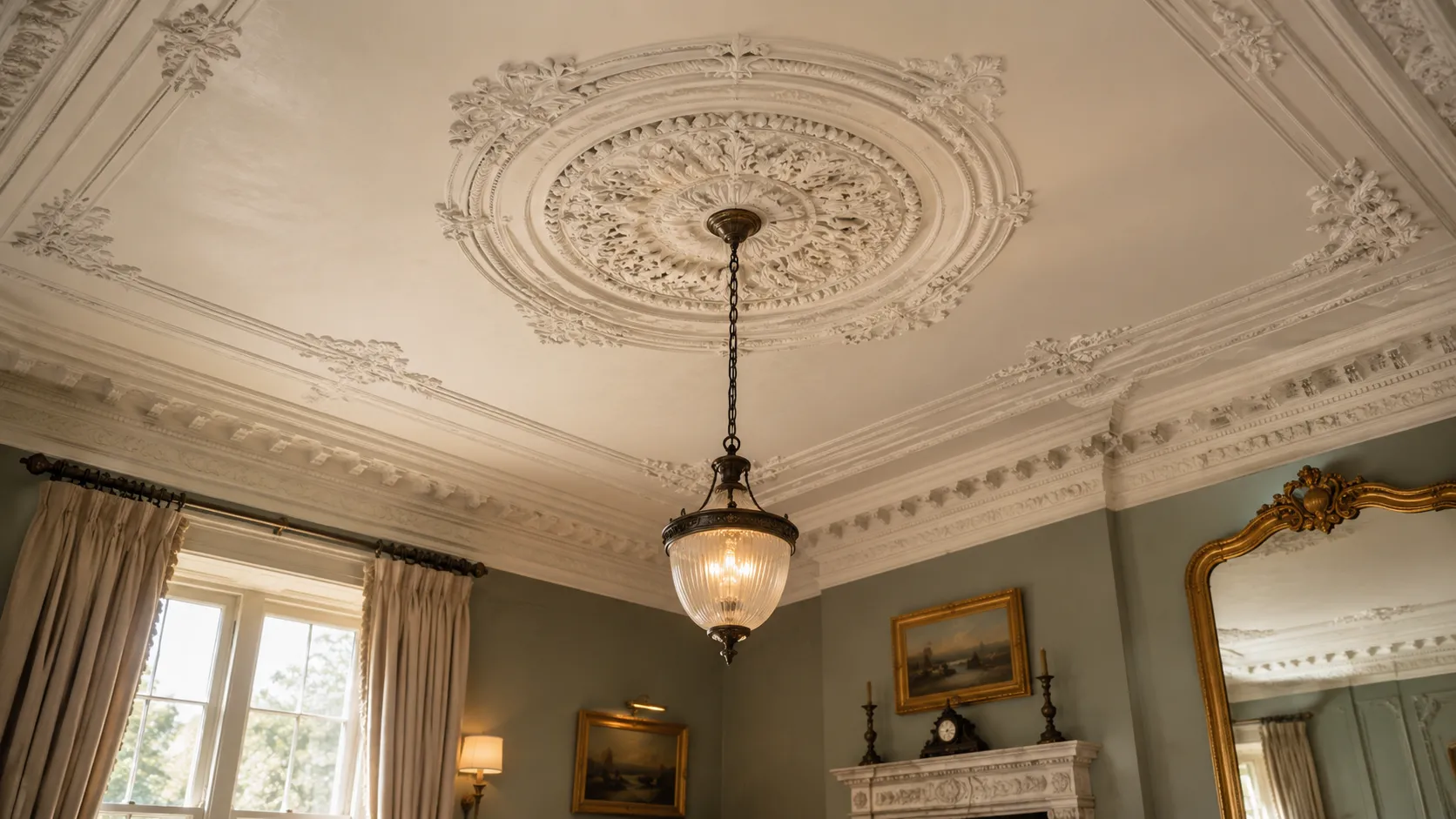
When people talk about restoring or adding period details, the phrase victorian ceiling rose usually refers to a circular ornamental centrepiece that sits around the ceiling’s light position, designed to read as part of a wider scheme of cornices, ceiling panels, and other plasterwork.
Where Ceiling Roses Came From
Ceiling roses rose to prominence in the 19th century as decorative plasterwork became more accessible and interior fashion shifted toward layered ornament. Earlier homes often relied on simpler ceiling treatments, but as Victorian design embraced richer detailing, ceilings became an opportunity for craftsmanship and status.
Plasterwork also benefited from improved moulding techniques. Repeated patterns could be cast with consistent detail, which helped popularise motifs across different price points. What began as a high-style finish gradually became a familiar feature in many Victorian interiors.
The Practical Purpose Behind the Decoration
Ceiling roses were not purely decorative. They developed alongside changes in lighting and ceiling hardware.
Key practical functions included:
- Framing the light point: A rose visually anchors the centre of the ceiling where a pendant drops.
- Covering joinery and fixings: It can conceal minor ceiling imperfections around the light opening and the base hardware.
- Supporting visual balance: In high ceilings, a pendant alone can look small or “lost.” A rose gives the eye a broader centrepiece.
Historically, as lighting shifted from candles and oil lamps to gas and then electricity, the ceiling centre became a busy area: canopy plates, hooks, and later wiring penetrations. A rose helped tidy that transition visually.
How Victorian Ceiling Roses Are Designed
Victorian roses tend to be more layered and ornate than later styles. Their design language usually mirrors other Victorian trim elements: cornices, corbels, and ceiling panel mouldings.
Common design traits:
- High-relief detail: Deeper shadows and crisper modelling to read well from the floor.
- Dense ornament: Florals, leaves, and scrolls are often packed closer together.
- Strong symmetry: Radial patterns emphasise the ceiling’s centre and create a formal feel.
- Defined borders: Many roses use beading, leaf bands, or repeating motifs to form a clear outer ring.
In plainer rooms, a simpler rose might use a repeating leaf or petal rhythm. In more formal rooms, the centre may feature a pronounced flower, with multiple bands of secondary patterning around it.
Typical Motifs You’ll See
Victorian ornament borrows heavily from classical and natural forms. Ceiling roses frequently repeat motifs used elsewhere in the home.
Common examples include:
- Acanthus leaves: A classical motif associated with richness and formality.
- Florals and rosettes: Often used as a central “button” with radiating petals.
- Scrollwork: Curving shapes that add movement and complexity.
- Beading and egg-and-dart style borders: Details that give structure to the perimeter.
The motif choice matters because it affects how “busy” the ceiling feels. A delicate floral can read lighter and softer, while acanthus and heavy scrolls read more grand.
Proportion and Scale in Victorian Rooms
Scale is the difference between a rose that looks authentic and one that feels awkward. Victorian rooms often have higher ceilings and more formal proportions, and the ceiling rose needs to respond to that.
Practical proportion cues:
- Ceiling height: Higher ceilings generally carry larger roses without looking oversized.
- Pendant scale: A substantial pendant often needs a rose with enough visual weight to match it.
- Room size: In larger rooms, a small rose can feel like a coin on a dinner plate.
Just as importantly, the rose should sit comfortably within the overall ceiling layout. If the room has ceiling panels, the rose becomes the “centre medallion” that completes the geometry.
How Ceiling Roses Work With Modern Lighting
Modern pendants and canopies can create small problems with older-style roses, mainly because canopy sizes and mounting methods vary. The best results come from treating the rose as a design element first, then ensuring the light fitting’s hardware will sit cleanly.
Common compatibility considerations:
- The canopy should cover the central opening neatly without leaving gaps.
- Chains and rods should appear centred and straight when viewed from below.
- If the pendant is visually strong, the rose should complement it rather than compete.
In many period restorations, the goal is not to mimic the past perfectly but to preserve the room’s visual logic: the light point looks intentional, and the ceiling reads as a composed surface.
Why They Still Matter in Period-Style Interiors
A ceiling rose does something subtle but powerful: it gives the room a centre. That centre helps a space feel structured, even when the rest of the room is relatively simple. It also ties the ceiling to the room’s trim details, which is why Victorian interiors often feel cohesive when the ceiling is treated as part of the overall design.
For older homes, ceiling roses can also be a way to repair visual disruption after rewiring, repairs, or lighting changes, restoring a sense of continuity without needing to redo an entire ceiling.

Happy
0 %

Sad
0 %

Excited
0 %

Sleepy
0 %

Angry
0 %

Surprise
0 %
 0
0
 0
0