A Planner’s Guide to Comedy at Weddings and Private Parties
Read Time:5 Minute, 4 Second
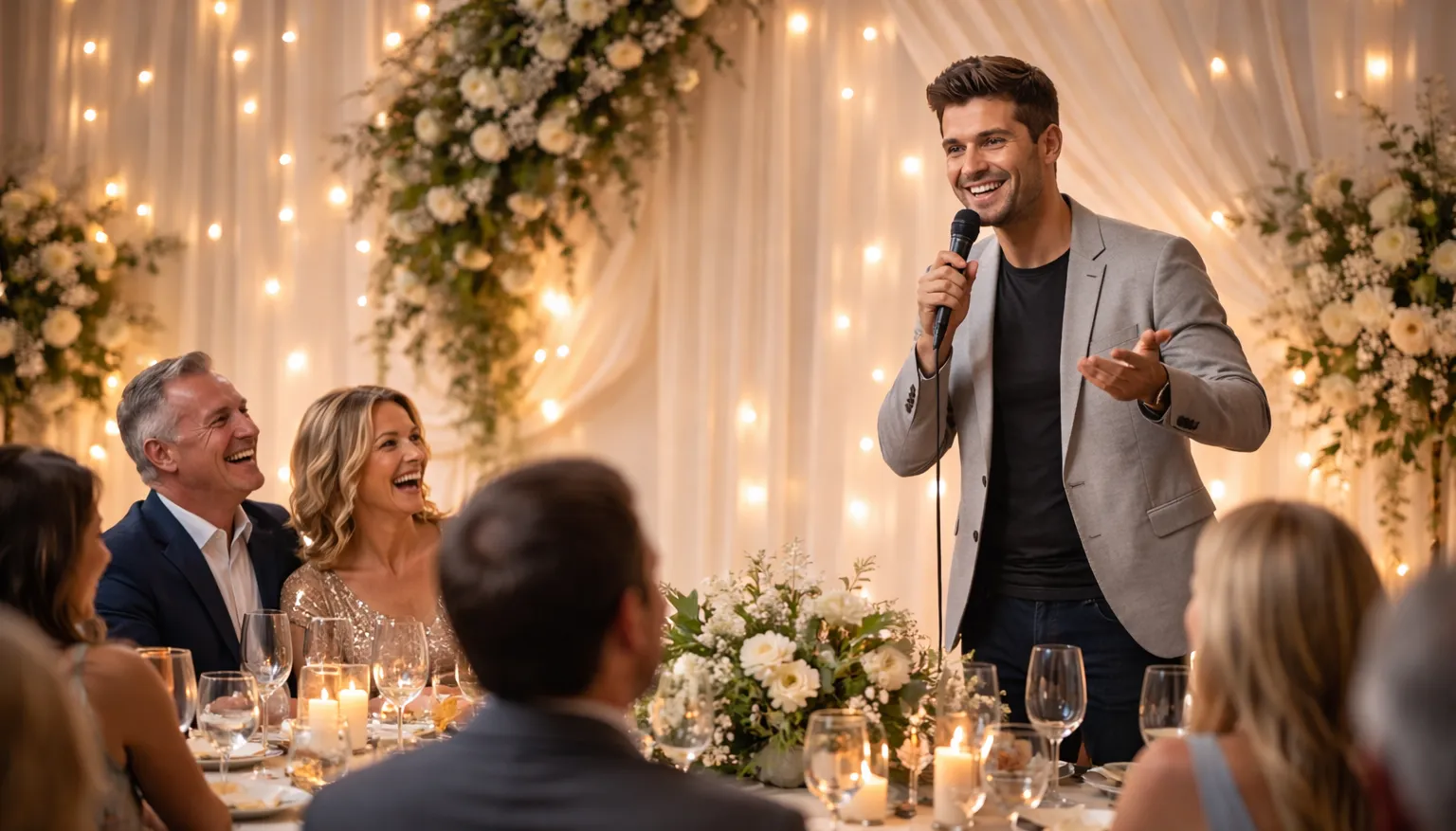
Live comedy can be the highlight of a wedding or private party, but it sits in a delicate spot. Guests are emotionally invested, the room is mixed, and the schedule is already full of moments that matter. When comedy works, it feels effortless. When it doesn’t, it can pull focus from the celebration.
That’s why planners treat comedy less like a “slot” and more like a designed experience, factoring in who the guests are, where the energy peaks, and what the venue can support. In the early stages, it’s common to look at shortlists of the best comedians for hire alongside the run sheet and guest mix, because the right performer for a corporate gala can be completely wrong for a wedding with three generations in the room.
Start with the guest mix, not the comedian
Private events rarely have a single audience type. Weddings often include grandparents, work friends, school friends, kids, and plus-ones who don’t know anyone. Private parties can be even trickier, especially milestone birthdays where different eras of the host’s life collide.
A useful mental model is to identify the “most sensitive listener” in the room. Not because the night should cater only to them, but because they set the risk threshold. If your most sensitive listener is likely to be uncomfortable with relationship jokes, coarse language, or crowd work that singles people out, your booking choices narrow quickly.
You can still have comedy that feels sharp and adult without leaning on shock or embarrassment. The best fit is usually a performer who can keep the room included rather than split into those who love it and those who endure it.
Where comedy fits best in a wedding run sheet
Timing is the difference between “amazing” and “why did we do that?” Comedy needs attention, and attention is a limited resource on a night full of speeches, photos, dinner service, and dancing.
Common placements that tend to work:
- After mains, before dessert: People are comfortable, seated, and not yet drifting to the bar or dance floor.
- Between speeches and dancing: It can act as a bridge that resets the energy before the party portion.
- As a short MC-led segment: Instead of a full stand-up set, a comedian MC can do light connective material across the night.
Placements that often backfire:
- During meal service when cutlery noise and staff movement compete with punchlines.
- Too late in the night when the room becomes uneven, louder, and more distracted.
- Immediately after an emotional speech where the tone is still tender and the reset feels abrupt.
Set length and format: keep it tighter than you think
For weddings and private parties, shorter is usually better. A tight 10 to 20 minutes can feel perfect. Thirty minutes can be great with the right crowd, but it increases the chance that parts of the room disengage.
Formats to consider:
- Stand-up set: Best when everyone is seated and you can control the room.
- Comedian MC: Ideal when you need flow, introductions, and quick resets.
- Light “roast” elements: Only if the hosts explicitly want it and boundaries are crystal clear.
A common mistake is assuming crowd work is automatically safer because it’s “in the moment.” Crowd work can be brilliant, but it also increases unpredictability, especially with family dynamics and alcohol.
The brief that prevents awkward moments
A good comedy brief is not a script. It’s guardrails and context. Share it early enough that the performer can tailor and avoid landmines.
Include:
- Who’s in the room: ages, cultural mix, any VIPs, the overall vibe.
- Non-negotiables: topics to avoid, names not to mention, anything sensitive (recent bereavement, separations, workplace issues).
- Pronunciations and key relationships: parents’ names, wedding party roles, any blended-family dynamics.
- Tone guidance: playful and warm, cheeky but clean, no swearing, minimal crowd work, etc.
- House rules: whether guests can be filmed, whether the comedian can reference the venue, and what the hosts want the night to feel like.
If you only provide one thing, provide the “do not mention” list. It’s the simplest protection you have.
Venue and production basics that matter a lot
Comedy is audio-first. If guests can’t clearly hear, the material dies, and the performer may push harder to get laughs, which can change the tone.
Plan for:
- A proper microphone: handheld wired or quality wireless, plus a tested sound system.
- Lighting: the performer should be visible without spotlight-level intensity.
- Stage position: avoid placing the act beside the bar line or in front of a busy service path.
- Room noise control: close doors, pause background music, and coordinate with catering.
One overlooked detail is sightlines. If half the room can’t see, half the room won’t fully engage.
How to set expectations with hosts and guests
Comedy at private events works best when it’s framed as part of the celebration rather than a surprise that interrupts it. Hosts don’t need to hype it like a headline act, but they should signal that “we’re all watching this together.”
For planners, it helps to align on two expectations:
- What success looks like: warm and inclusive laughs, not necessarily a club-level roar.
- What boundaries are: especially around teasing, language, and referencing personal stories.
If the couple or host wants edgier comedy, that can work, but it should be a deliberate choice based on who is actually attending, not a guess made during planning.
A practical checklist to keep comedy smooth on the night
- Confirm start time and a five-minute warning with the venue and MC.
- Ensure the mic is tested with the same setup that will be used live.
- Have a clear introduction and a defined end, so the performer isn’t fading out.
- Keep speeches and formalities from running over into the comedy slot.
- Make sure the performer has a quiet place to prepare and a single point of contact.
When the structure is calm and the brief is clear, comedy feels like it belongs, and the event keeps its momentum.

Happy
0 %

Sad
0 %

Excited
0 %

Sleepy
0 %

Angry
0 %

Surprise
0 %
 0
0
 0
0