
Does Composite Bonding Damage Teeth? Clearing Up Common Myths
Read Time:4 Minute, 58 Second
Composite bonding has a reputation for being a “quick fix,” which can lead to confusion about what it really does to the tooth underneath. Some people worry it permanently damages enamel, weakens teeth, or creates problems down the road. Others assume it’s completely risk free and lasts forever. The truth sits in the middle: bonding is often conservative, but it still counts as dental work and it comes with tradeoffs.
In discussions about cosmetic repairs, composite bonding teeth usually refers to shaping and attaching tooth-colored resin to improve small chips, gaps, or uneven edges, and the amount of change to the natural tooth depends on what needs to be corrected.
What Composite Bonding Actually Changes on a Tooth
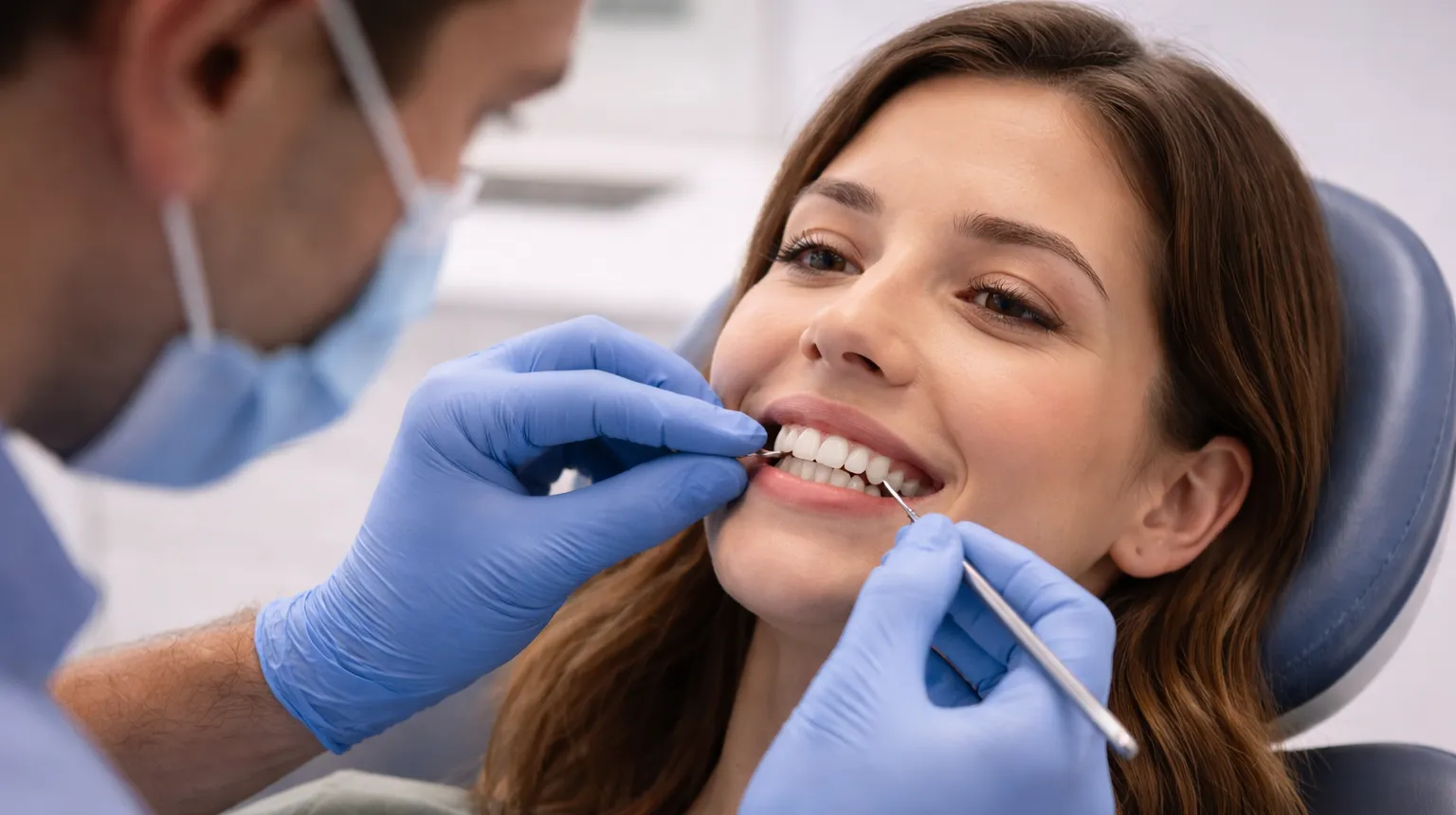
Composite bonding uses a resin material that is applied in layers, shaped, and hardened with a curing light. For the resin to hold securely, the surface must be properly prepared. That preparation is often the part people interpret as “damage.”
In many cases, the dentist gently roughens the enamel surface and uses an etching gel and bonding agent to create a strong attachment. For minor edge repairs, this can involve very little removal of tooth structure. In other cases, small adjustments are made so the final shape looks natural and doesn’t interfere with the bite. If a tooth is being recontoured significantly, more reduction may be required.
So bonding can be minimal, but it isn’t always zero-prep. The key detail is that it typically affects enamel rather than deeper layers when used appropriately.
Myth 1: “Bonding Always Requires Drilling Down the Tooth”
Bonding does not automatically mean aggressive drilling. For small chips or slight reshaping, the preparation may be limited to surface conditioning. However, some “no-prep” marketing can be misleading too.
If the tooth has uneven edges, a rotated angle, or a bite that would knock against the resin, a dentist might remove tiny amounts of enamel to avoid a bulky result. Also, if there is old decay or a failing filling, that problem must be treated first. In those situations, you may see drilling, but it is not because bonding demands it. It is because the tooth already needs restorative care or the shape requires refinement.
Myth 2: “Once You Bond a Tooth, You Can’t Go Back”
Bonding is often described as more reversible than options like veneers because it can be removed or replaced without the same level of tooth reduction. That said, the tooth is rarely exactly the same afterward.
Etching and surface roughening change the outer enamel texture. If the resin is removed later, the enamel can look slightly different and may require polishing or smoothing. This is usually minor, but it’s still a change. Think of bonding as conservative rather than perfectly reversible.
Myth 3: “Composite Bonding Weakens Teeth”
When bonding is done correctly on a healthy tooth, it does not automatically weaken the tooth. The resin can even add protection to a chipped edge by covering and reinforcing it.
Problems tend to come from mismatch between the bonding and the bite. If you grind your teeth at night, bite pens, chew ice, or frequently tear open packaging with your teeth, the resin can chip. Chipping itself does not mean the tooth is weaker, but repeated repairs and polishing can gradually alter surface contours. Also, if bonding is placed over untreated decay or a leaking filling, that can create bigger issues, but again, that’s about the underlying condition, not bonding as a concept.
Myth 4: “Bonding Causes Cavities”
Composite resin does not cause decay. Cavities form when bacteria and acids break down tooth structure. The risk with any restoration is at the margins, where the material meets the tooth.
If the edge of the bonding is rough, overhanging, or not well sealed, plaque can collect more easily. Over time, this can raise the risk of decay at the boundary. Good technique matters, but so does aftercare. Daily brushing, flossing, and routine checkups reduce the chance of problems around bonded areas.
What the Real Risks Are
Bonding is generally safe, but it has realistic downsides:
- Chipping and wear: Resin is not as hard as enamel or porcelain and can wear faster on biting edges.
- Staining: Resin may stain more readily than porcelain, especially with coffee, tea, red wine, or smoking.
- Maintenance: Some people need occasional polishing or small repairs to keep the surface smooth and glossy.
- Bite sensitivity: If the bite is slightly off after bonding, it can feel uncomfortable and needs adjustment.
- Expectation gaps: Bonding can improve shape and small cosmetic issues, but it cannot correct major alignment, severe discoloration, or large structural damage on its own.
None of these are guaranteed, but they are common enough to plan for.
How to Tell If Bonding Is a Good Idea for You
Composite bonding tends to work best when:
- The tooth is structurally sound and mostly intact.
- The changes needed are modest, like smoothing an edge, closing a small gap, or evening out symmetry.
- Your bite does not place heavy force on the exact area being bonded.
- You are willing to maintain it, including avoiding habits that chip resin.
It may be less suitable if you have significant grinding, severe crowding, untreated gum disease, active decay, or you want a dramatic color change. In those cases, other options may be discussed first.
Protecting Bonded Teeth Over Time
The most protective steps are simple and consistent. Brush twice a day, floss daily, and keep regular dental visits so the edges can be checked and polished if needed. If you clench or grind, a night guard can be the difference between bonding that lasts and bonding that chips repeatedly. Also, treat bonded edges like natural enamel, meaning no biting ice, pen caps, or hard candy.
Bonding is not inherently damaging. The main question is whether it’s the right match for the condition of your teeth and the way you use them every day.

Happy
0 %

Sad
0 %

Excited
0 %

Sleepy
0 %

Angry
0 %

Surprise
0 %
 0
0
 0
0