How Industrial Cutting Tools Are Made: From Steel to Shop Floor
Read Time:5 Minute, 15 Second
Industrial knives look deceptively simple. A straight edge, a few mounting holes, a polished surface, and it is ready to cut. In reality, a reliable production blade is the result of tightly controlled decisions about metallurgy, heat treatment, geometry, surface finish, and inspection. Early comparisons between industrial knives manufacturers often come down to how consistently they can hold hardness, flatness, and edge integrity across repeat batches, because small variations show up quickly as waste, vibration, or shortened edge life.
What follows is a practical tour of the manufacturing journey, from raw steel to a knife installed on the line.
Start With the Job, Not the Steel
Before material is even chosen, the end use should be clear: what is being cut, at what speed, with what machine type, and under what environmental conditions. A knife for abrasive fibreboard has different priorities than one for sticky films, and a blade in a wet washdown environment will face corrosion risks that a dry converting line will not.
The application influences everything that comes next: steel family, thickness, edge angle, whether the knife will be re-ground multiple times, and whether a coating is appropriate. When these decisions are made late, manufacturers often have to compromise, which can lead to blades that technically meet a drawing but struggle on the floor.
Steel Selection and Traceability
Most industrial knives begin as plate, bar, or strip in a tool steel or stainless steel grade suited to the work. Tool steels are common when wear resistance and edge retention are the priority, while stainless grades are used when corrosion resistance matters more. Some applications call for carbide components or inserts, especially where abrasion is extreme.
A key manufacturing detail is traceability. Heat numbers, certificates, and consistent sourcing help ensure that the steel being machined today behaves like the steel used last quarter. Even small composition differences can affect how the blade hardens and how brittle the edge becomes after heat treatment.
Rough Cutting, Profiling, and Stress Control
Once the stock is selected, the blank is cut to shape. Depending on thickness and precision requirements, this might be done by laser cutting, waterjet, or machining. Waterjet is often preferred where heat input needs to be minimized, while laser can be efficient for certain profiles. For thicker knives, machining is common.
At this stage, internal stresses can be introduced through cutting and shaping. If those stresses are not accounted for, they may release later during heat treatment or grinding, leading to warping. Manufacturers manage this with process sequencing, controlled material removal, and, in some cases, stress-relief steps.
Heat Treatment: Hardness, Toughness, and Consistency
Heat treatment is where a blade’s personality is set. The goal is not simply “harder is better.” A knife that is too hard may chip, while a knife that is too soft may dull quickly or deform under load. The right target hardness depends on the material being cut, the machine forces, and the desired balance between edge retention and toughness.
A typical heat treatment cycle includes austenitizing, quenching, and tempering, sometimes with cryogenic steps depending on steel type and performance goals. What matters most is repeatability. Tight temperature control, proper soak times, and consistent quenching conditions help ensure that two knives from the same batch behave the same way once installed.
Precision Grinding and Edge Formation
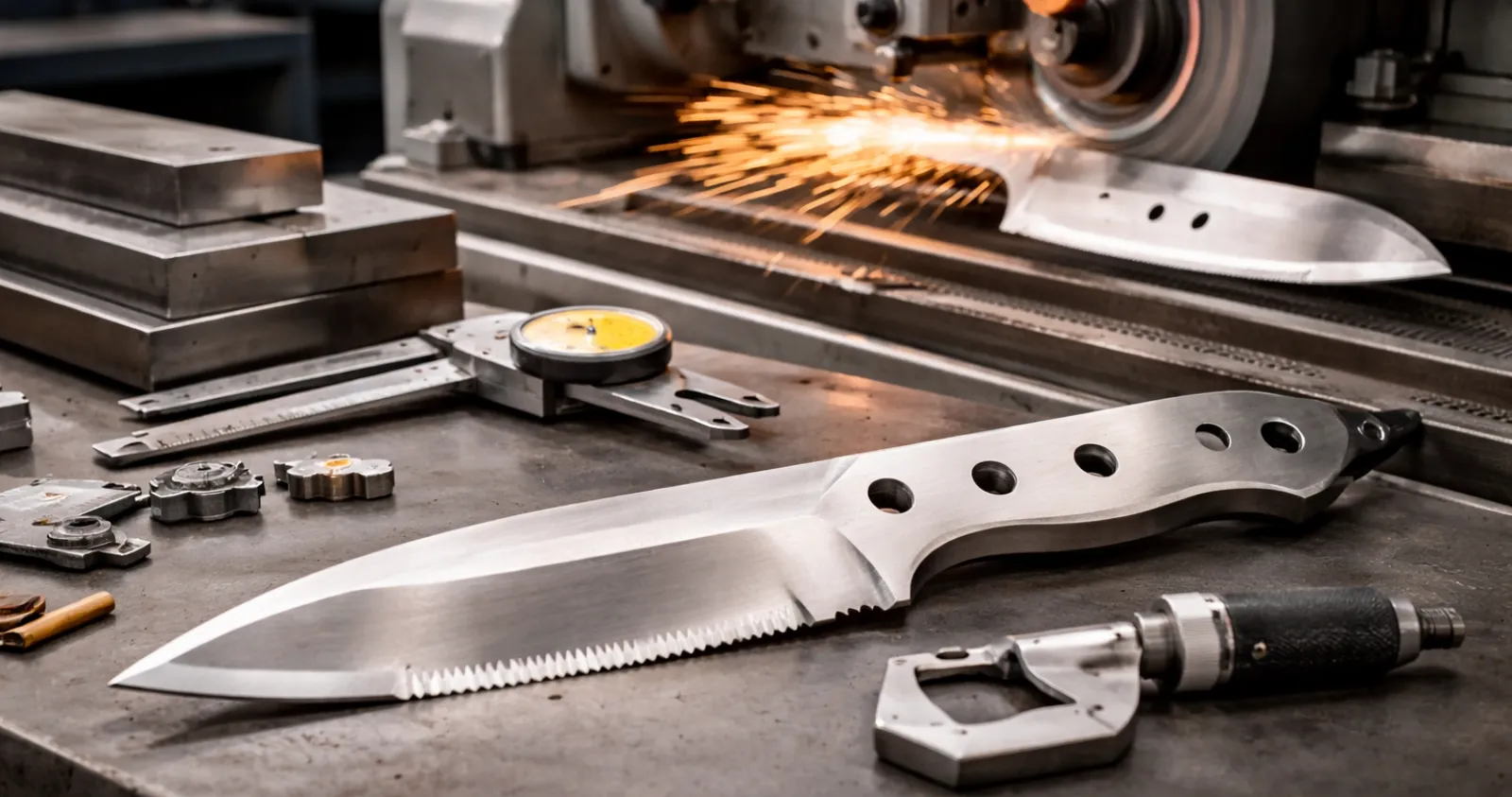
After heat treatment, the blade is brought to final dimensions. Grinding is where thickness, flatness, parallelism, and surface finish are dialed in. For rotary knives or slitter systems, concentricity and balance-related features can be critical. For guillotine-style knives, straightness and edge uniformity tend to dominate.
Edge formation is also more nuanced than it appears. The bevel angle, edge radius, and final finish influence how the blade initiates a cut, how it resists micro-chipping, and how quickly it dulls. A razor-sharp edge may cut beautifully at first, but if it is too thin for the load, it can break down rapidly. Many high-performing industrial blades use a controlled edge preparation that favors stability over extreme sharpness.
Coatings and Surface Treatments
Coatings are not automatic upgrades. They are tools that solve specific problems: reducing friction, improving wear resistance, or limiting material build-up. Common industrial coatings can improve performance in certain scenarios, but they can also introduce brittleness or change tolerances if not applied with the full process in mind.
Surface treatments and finishes matter even without coatings. A smoother finish can reduce drag and sticking with some materials, while a carefully controlled finish can also support hygiene requirements in sensitive environments.
Quality Control: What Gets Measured Gets Managed
Inspection is where good manufacturing becomes dependable manufacturing. Critical checks often include:
- Hardness verification across the blade
- Thickness and flatness measurements
- Hole location and alignment
- Edge angle consistency
- Surface finish standards
- Visual inspection for grinding burns, cracks, or chipping
For some knives, additional checks like runout, concentricity, or balance-related measurements may be relevant. The practical point is that blades should be validated against the factors that actually cause downtime, not just against a generic drawing.
Packaging, Handling, and Getting to the Line
A finished knife can be compromised by poor handling long after manufacturing is complete. Edge protection, corrosion protection, and safe packaging are not afterthoughts. A small nick from shipping or improper storage can create a weak point that spreads during cutting, especially in brittle edges or high-speed systems.
Once on the shop floor, installation practices also matter: correct torque, alignment, anvil condition, and proper clearance settings. Even an excellent knife will perform poorly if it is installed into a system that is misaligned or contaminated with debris.
What “Good Manufacturing” Looks Like in Practice
If you are evaluating knives for a production environment, the most meaningful questions tend to be process questions:
- Can the maker hold hardness consistently, batch to batch?
- Are flatness and parallelism controlled tightly enough for your machine?
- Is the edge geometry stable under your line speed and material type?
- Is inspection aligned with real failure modes like chipping, warping, and uneven wear?
- Can the knife be re-ground predictably without losing performance?
A blade is only as good as the repeatability behind it. When manufacturing is disciplined, the knife becomes less of a consumable mystery and more of a predictable component in a stable cutting system.

Happy
0 %

Sad
0 %

Excited
0 %

Sleepy
0 %

Angry
0 %

Surprise
0 %
 0
0
 0
0