Why Coffee Machines Lose Pressure Over Time
Read Time:4 Minute, 43 Second
Pressure is one of the main factors behind a balanced espresso shot. When a coffee machine cannot build or maintain the right pressure, the result may be weak coffee, fast extraction, thin crema, poor steam performance, or inconsistent flavour. In regular home, office, or commercial use, coffee machine repair brisbane can become part of equipment care when pressure problems begin affecting daily coffee quality. Pressure loss often develops gradually, which means the early warning signs can be easy to miss until the machine starts producing noticeably poor results.
Scale Buildup Can Restrict Water Flow
One of the most common causes of pressure loss is scale buildup. Water naturally contains minerals, and those minerals can collect inside pipes, valves, boilers, heating elements, and other internal parts. Over time, this buildup narrows water pathways and makes it harder for the machine to push water through the system properly.
Scale can also affect heating performance, which may change how water moves through the machine. If water flow becomes restricted, espresso shots may run unevenly or lose strength. In severe cases, the machine may struggle to deliver water at all. Regular descaling, where appropriate for the machine type, can help reduce this risk.
Worn Seals and Gaskets Allow Pressure to Escape
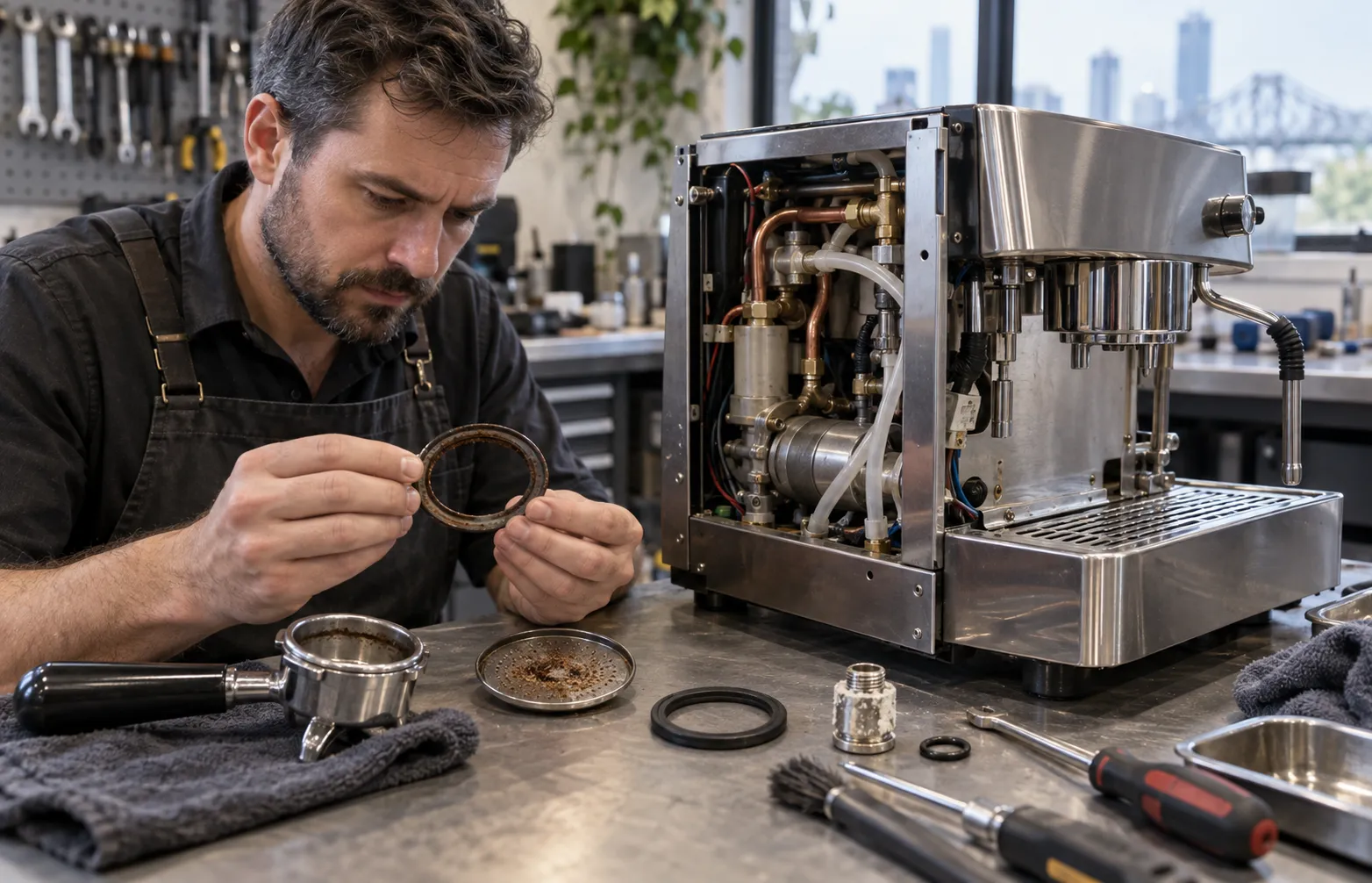
Coffee machines rely on seals and gaskets to keep pressure contained. These parts are exposed to heat, water, coffee oils, and repeated movement, so they naturally wear down over time. A worn group head gasket, steam valve seal, or internal O-ring can allow water or steam to escape instead of staying within the system.
Signs of worn seals may include dripping, leaking around the group head, weak extraction, or steam escaping from places it should not. These problems may start small but usually become worse with continued use. Replacing worn seals is a normal part of coffee machine maintenance.
Pump Performance Can Decline
The pump is responsible for moving water through the machine under pressure. If the pump becomes weak, blocked, noisy, or inconsistent, the machine may not reach the pressure needed for proper extraction.
Pump problems can happen because of age, scale, air in the system, poor water supply, or long periods of heavy use. Commercial machines are especially dependent on reliable pump performance because they may produce many drinks every day. When a pump starts to fail, coffee quality can become unpredictable even if the beans, grinder, and technique remain the same.
Blocked Group Heads Affect Extraction
The group head is where water meets the coffee. Coffee oils, fine grounds, and residue can build up in the shower screen, dispersion plate, and internal passages. If these areas are blocked, water may not flow evenly through the coffee puck.
A blocked group head can make it seem like the machine has lost pressure, even when the pump is still working. Shots may pour slowly, channel unevenly, or taste bitter and unbalanced. Regular backflushing, cleaning, and inspection help keep the group head working properly.
Valves Can Stick or Wear Out
Coffee machines use valves to control water and steam movement. These parts open and close repeatedly during brewing, steaming, filling, and pressure release. Over time, valves can become blocked by scale, affected by worn seals, or stuck due to residue.
A faulty valve may cause pressure to escape, water to move in the wrong direction, or steam performance to weaken. Because valves are internal, the symptoms may not always be obvious. Users may simply notice inconsistent shots, unusual sounds, slow flow, or unexplained leaking.
Grinder Settings Can Be Mistaken for Pressure Problems
Not every pressure issue starts inside the machine. Grinder settings can make a healthy machine appear faulty. If the grind is too coarse, water flows through the coffee too quickly and the shot may taste weak. If the grind is too fine, water may struggle to pass through, creating slow extraction or pressure strain.
Dose, tamping, bean freshness, and basket condition also affect extraction. Before assuming the machine has a mechanical fault, it is worth checking whether the grinder and coffee preparation method are consistent. However, if pressure problems continue after basic adjustments, the machine may need closer attention.
Leaks Reduce System Pressure
Any leak can reduce the pressure available for brewing or steaming. Leaks may appear under the machine, around the group head, near the steam wand, from the water tank connection, or inside the machine body. Internal leaks can be harder to spot because water may collect in hidden areas before it becomes visible.
Even a small leak can affect performance over time. It may also damage electrical parts, create corrosion, or lead to larger repair issues if ignored. A leak should be treated as a warning sign rather than a minor inconvenience.
Poor Maintenance Speeds Up Pressure Loss
Coffee machines work with heat, water, pressure, coffee oils, and milk residue, so maintenance is not optional if consistent performance matters. Skipping cleaning, ignoring water quality, delaying servicing, or using the wrong descaling method can all contribute to pressure problems.
Good maintenance includes cleaning removable parts, backflushing when required, descaling according to the machine’s instructions, checking seals, using suitable water, and responding early to leaks or unusual noises. These habits help prevent small issues from becoming expensive faults.
Keeping Pressure Problems Under Control
Pressure loss usually comes from a combination of wear, buildup, blockages, and daily use. Scale, worn seals, weak pumps, blocked group heads, faulty valves, leaks, and grinder issues can all affect how a coffee machine performs. Noticing changes early helps protect coffee quality and reduces the chance of sudden breakdowns. A well-maintained machine is more likely to deliver steady pressure, better extraction, and more consistent coffee over time.

Happy
0 %

Sad
0 %

Excited
0 %

Sleepy
0 %

Angry
0 %

Surprise
0 %
 0
0
 0
0